 Strum
Strum

The Spark —
the moment you wonder if it's too late
It starts with a video. Your kid picks up an air guitar to a song on the radio and something shifts in you — a quiet wish you almost dismiss.
Or maybe it's after your daughter's recital. She plays three chords and you realize: you've been meaning to learn for fifteen years.
It's not too late. It was never too late. The guitar sitting in the corner of your living room is still in tune. We checked.
Teaching moment: The best time to start was last year. The second best time is this week.

The First Lesson —
the awkward, honest beginning
Fingers don't cooperate. The G chord buzzes. The teacher says "that's exactly right — that's what it sounds like on day one."
We teach in the same room, sometimes side by side. A seven-year-old learning "Twinkle Twinkle" two feet from a parent wrestling their first barre chord.
Nobody performs here. Everybody practices. The room has heard every stumble and every small victory since 2018.
Teaching moment: Buzzing strings aren't failure — they're your fingers learning their new job.
The Plateau —
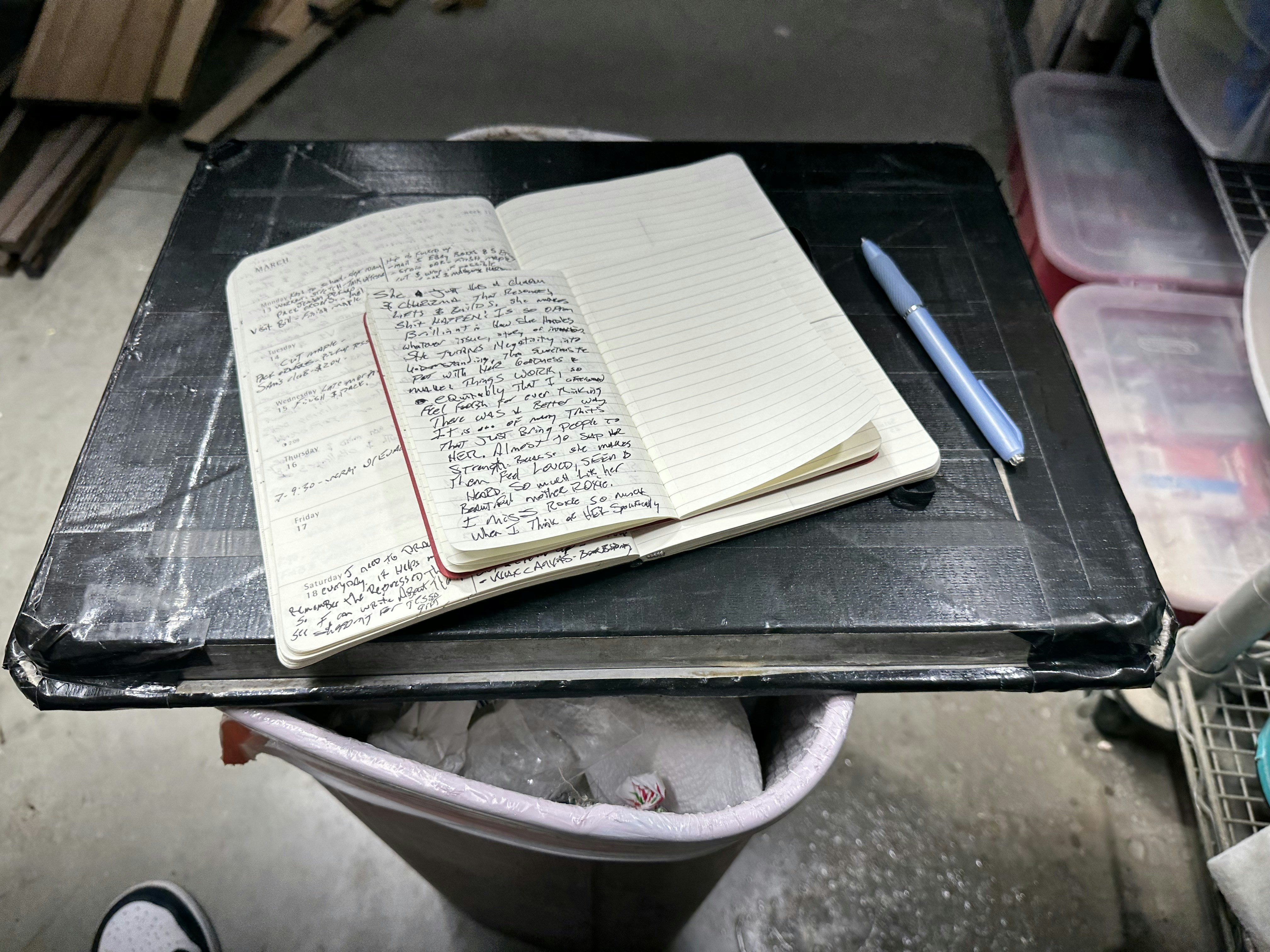
and the practice journal that breaks through it
Around week six, something stalls. It's not failure — it's consolidation. The brain is building muscle memory you can't yet feel.
Every Strum student gets a practice journal. Not a homework sheet — a log of wins. Three things you noticed today. One thing that almost worked.
Families who use it together practice 40% more consistently. The plateau becomes a launching pad.
Teaching moment: 22 focused minutes beats 90 distracted ones. Every time.

The Stage —
grandma's phone camera pointed your way
Our recitals aren't concerts. They're living room moments. Folding chairs. A bowl of chips on the counter. Grandma filming on her phone.
The student plays three chords they chose. The room goes quiet. Then they finish, and the room erupts — not because it was perfect, but because it happened.
That moment is what we're building toward. Not mastery. The courage to play something real in front of people who love you.
Teaching moment: You don't need to be good to perform. You need to be ready to be heard.
The Family
Practice Guide
The same guide we hand every new Strum family. Twelve pages that cover how to practice together without it becoming homework, how to celebrate small wins, and what to do when the plateau hits.
Strum
Family Practice Guide
Download the guide
Free, no spam. Just the guide and a weekly practice tip.
Watch: Your First 7 Days
of Guitar
Email only. Day 1 is free — no signup needed.

How to hold a guitar without looking awkward

Your first two chords — Em and Am

Strumming that actually sounds like music

Playing your first complete song
The moment it clicks
Not testimonials. Moments. The ones families remember long after the lesson ends.
"We signed up thinking it was just for Cora. Six months later, my husband and I are both taking lessons in adjacent time slots. We play together on Sunday mornings now. I didn't expect that."
"I'm 47 and I always said I'd learn someday. Strum was the first place that didn't make me feel embarrassed about being a beginner. My teacher was genuinely excited to work with me."
"The practice journal changed everything for us. My son used to resist practicing. Now he's the one who reminds me. He logs his wins himself. That was not on my bingo card."